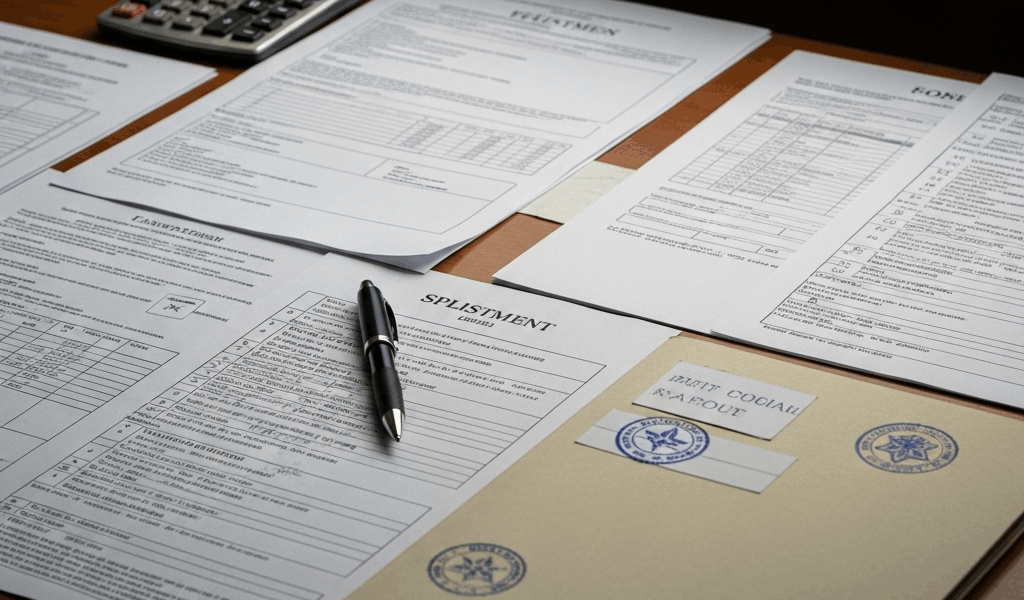
Why Your Meal Per Diem Got Cut
I’ve sat across from confused service members holding travel vouchers showing meal per diem rates that made no sense to them. The frustration is real — you traveled, you ate, you submitted your claim, and suddenly finance tells you that your daily meal allowance is 75% of what you expected. Before filing an appeal, understanding why this happened matters more than you’d think.
Three reasons account for nearly every reduced rate situation I’ve encountered.
First: location-based rate differences. The Joint Travel Regulations (JTR) establishes different meal per diem rates depending on your duty location. San Francisco gets a higher rate than rural Kansas. This isn’t punishment — it reflects actual cost of living. You travel to a high-cost area thinking you’ll receive those rates, but then your orders show you spent part of your time at a lower-cost location instead. That’s when your rate gets adjusted. The government doesn’t average; they apply the rate for where you actually performed duty.
Second: partial-day calculations. Arriving midday on the first day or departing midday on the last day triggers a reduced rate — typically 75% of the full daily allowance. This rule exists in JTR Chapter 4, Table 4-17. I made this mistake myself on my first TDY appeal. I thought I was owed a full day’s per diem for arrival day because I showed up at 11 a.m. Seemed obvious, right? The regulation doesn’t care about what seems obvious. Partial days get partial rates. If you didn’t account for this, your appeal needs to address whether you actually qualify for full rates on those boundary days.
Third: missing or incomplete meal claim documentation. Some branches require itemized receipts. Some require only a declaration of meals consumed. Your service branch’s rules matter enormously here. If your voucher shows meals claimed but no supporting evidence attached, finance might reduce your rate pending receipt submission. This isn’t a denial — it’s a hold pending documentation. Once you submit what they need, the rate usually adjusts back up.
Probably should have opened with this section, honestly. Understanding the rule makes the rest of the process click into place.
Check Your JTR Rate First
Before drafting an appeal, know what you’re actually entitled to.
The JTR maintains a master rate table by location. You need two pieces of information: your duty location code and your specific dates of duty. Then you cross-reference the JTR Table 4-17 (as of the current regulation year — updates happen annually) to find your entitled rate.
Here’s a concrete example. San Francisco duty location code is different from Salina, Kansas. As of recent rate tables, a service member on TDY to San Francisco might be entitled to $79 per day for meals while the same member traveling to Salina gets $54 per day. If your voucher shows $54 and your orders state San Francisco, you have a clear case. If your voucher shows $54 and you were actually split between two locations, the rate depends on how many days you spent at each.
Your orders document matters here. Pull out the actual travel authorization or orders. The duty location listed there should match the JTR code. If there’s a mismatch — your orders say “San Francisco area” but finance applied a “Bay Area support personnel” rate — that’s a red flag worth investigating.
You’ll also encounter references to “M” rate and “R” rate adjustments. The “M” rate is the meals-only rate (what you’re getting). The “R” rate includes meals plus incidental expenses. Some reduced rate situations involve misapplication of which rate category applies to you. Service members on certain orders sometimes qualify for “R” rates instead of “M” rates. If your appeal targets this, pull your specific order authority and compare it to the JTR categories.
The JTR is free to access. The current version lives on the DFAS website under travel regulations. Download it, find your location’s code, find your rate, and compare it to what appears on your voucher. Twenty minutes maximum and you’ve got the factual foundation for everything that follows.
Step 1 — Request a Per Diem Justification
Start with a simple ask: written explanation of how your rate was calculated.
Contact your travel voucher processor directly. Most military installations have a travel support office or finance voucher section. If you’re working through DTS (Defense Travel System), use the DTS message function to ask for clarification. If you’re using email, send it to the address that processed your voucher — it’s usually printed on the voucher itself or you can find it through your base’s finance office.
Here’s what you need to request specifically:
- The location code applied to each day of your TDY
- The specific JTR rate table and section used
- Calculation method for any partial days
- Explanation of rate category applied (M vs. R rate)
- Any rate adjustments or reductions with justification
A sample email opener: “I’m reviewing my approved TDY meal per diem for [travel dates] and the rate shown is $X per day. Can you provide a written breakdown showing the location code, JTR section, and calculation method used to determine this rate? I want to verify it matches my authorized duty location.”
Stay professional. You’re not accusing anyone of error — you’re asking for transparency. Most processors respond within 5 business days. If the explanation makes sense once you read it, you may not have a valid appeal. But if their justification contradicts your orders, uses a wrong location code, or miscalculates partial days, you’ve got documented evidence for the next step.
Step 2 — Document Your Dispute
Now gather everything that supports your position.
Start with your orders. Print the travel authorization or TDY orders document. Circle or highlight the duty location. Make a note of arrival and departure dates and times if they’re specified. Most orders will list arrival date but not time — that matters for partial-day calculations.
Next: collect receipts and meal evidence. This varies by service. The Air Force and Navy often allow itemized meal receipts (credit card statements work). The Army historically required fewer receipts if you filed a declaration of meals consumed. Whatever your service branch requires, gather it. If you’re missing receipts, don’t panic — missing receipts don’t automatically kill your appeal if you can establish duty dates and locations clearly.
Create a timeline document showing:
- Actual arrival date and time at duty location
- Actual departure date and time from duty location
- Any changes to duty location during the TDY
- Meal receipts or declarations by date
- Any prior TDY vouchers to the same location (for rate consistency check)
If you performed duty at multiple locations during a single TDY, calculate days at each. If you arrived at 2 p.m. on day one, note that in your timeline — it determines whether day one gets 75% or 100% rate.
The evidence you’re building answers a simple question: “Based on where I was and when I was there, what rate should I have received per the JTR?”
Step 3 — File a Formal Appeal
If the processor’s justification doesn’t satisfy you, escalate formally.
The appeals path typically flows: voucher processor → finance officer → comptroller (sometimes called the financial management office). In DTS, there’s usually a “rebuttal” function. Use it. Upload your timeline document, orders, and supporting evidence. Write a brief narrative explaining why the applied rate was incorrect. Reference the specific JTR section that supports your rate.
Your narrative should be three paragraphs: (1) what rate was applied and why you believe it’s wrong, (2) what rate the JTR actually authorizes for your duty location and dates, (3) what supporting evidence proves your position.
Example: “My voucher applied a $54 daily rate for all TDY days. My orders specify San Francisco as the duty location. JTR Table 4-17 shows the San Francisco rate as $79 per day for my fiscal year. Days 1–3 should be 75% × $79 = $59.25 due to partial day arrival. Days 4–7 should be full $79. Day 8 should be 75% × $79 due to partial day departure. Attached are my orders and DTS authorization confirming location and dates.”
The finance officer (or comptroller) will review this within 30 days typically. They either approve the appeal, request additional evidence, or deny it with written justification. If approved, you get corrected payment. If denied, you get a written explanation — which leads to the next escalation if needed.
When to Escalate Beyond Your Unit
Most disputes resolve at the local level once you provide clear documentation. But escalation exists.
Take your case to DFAS (Defense Finance and Accounting Service) if:
- Your local finance office denies your appeal twice with contradictory reasoning
- You have two prior TDY vouchers to the same location showing a different rate, suggesting inconsistent policy application
- Your rate was reduced with a code or reference that doesn’t match any JTR section you can find
- The provided justification contradicts the orders in your DTS authorization
DFAS handles military travel pay disputes. Contact your regional DFAS office — your finance section can provide the number, or you can find it through the DFAS website. Escalation to DFAS happens only after local appeals are exhausted. They’ll conduct a final review and issue a final determination.
Travel card disputes are separate. If your government travel card was charged and the per diem reduction feels unfair, the card company has separate dispute processes — but those run parallel to your per diem appeal, not through it.
The vast majority of reduced-rate situations I’ve seen were resolved within one appeal cycle once proper documentation appeared. Finance offices apply rules correctly most of the time. When they don’t, it’s usually a misunderstood location code or forgotten partial-day calculation. Armed with your JTR table and clear documentation, you’re in position to correct it.


Leave a Reply