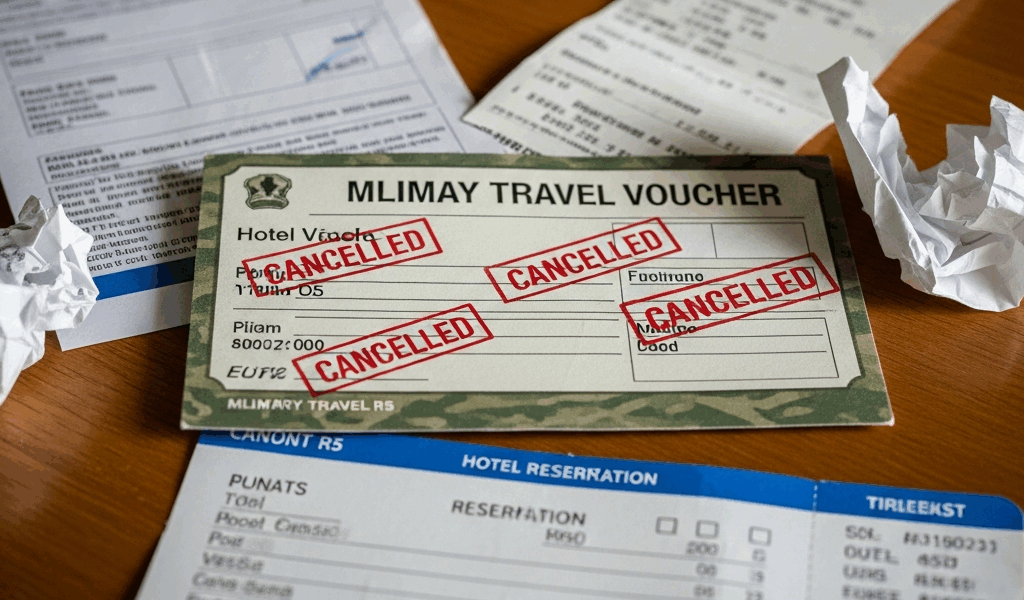
Why Early TDY Termination Creates a Finance Mess
TDY orders getting cut short has gotten complicated with all the bad advice flying around. I’ve spent years watching service members botch the paperwork — not because they’re careless, but because nobody actually explains what happens when you leave before the original end date. Most guides assume you finish the full assignment. This one doesn’t.
When your TDY ends early, you’re managing four problems simultaneously. Per diem eligibility shifts. Your lodging contract turns into a liability. The GTC bill keeps running regardless. Your DTS voucher logic inverts entirely. That’s a lot moving at once.
The stakes are real. Mishandle one piece and you’ll either overpay the government, shortchange yourself, or land on an audit flag. Worse — you could end up personally liable for hotel cancellation fees that should never have come out of your pocket. There is a clear path through this. You just need to know the sequence before you start clicking around in DTS.
What Per Diem You Are Actually Owed When Orders End Early
Probably should have opened with this section, honestly.
Here’s the rule: per diem pays through the last day of actual TDY, not whatever end date is printed on your original orders. Full stop. If your orders say June 30th but you’re wheels-up on June 24th, you’re owed per diem through June 24th. Not a cent beyond that.
But the first-and-last-day 75 percent rule still applies — at least if you want to calculate this correctly. Arrive June 10th at 8 PM, depart June 24th at 7 AM, and both of those days pay out at 75 percent, not the full daily rate. I learned this the hard way on my first early-termination voucher. I assumed I’d get the full rate through the original orders date. Finance rejected it. I resubmitted. Took an extra two weeks to see that money.
Don’t make my mistake.
Before you touch your DTS voucher, check whether your unit has already generated amended orders. You need those in writing first — the amendment comes from your S-1 or civilian HR equivalent, not from you. The second you know you’re leaving early, call them and ask specifically for amended orders reflecting the actual departure date. Don’t assume they’ll handle it automatically. They won’t.
Wait for the amended orders before you open DTS. Many members try to submit first and attach orders later. DTS doesn’t accommodate that workflow. Finance will reject the voucher or route it to manual audit, which adds weeks to your reimbursement cycle.
Lodging Costs and Cancellation Fees — Who Pays
This is where early termination gets genuinely painful. What was a simple government-rate booking on day one becomes a liability negotiation on day five.
Scenario one: government lodging, no checkout fee. You call, adjust your departure, they correct the bill to match your actual nights. Upload the revised receipt to DTS and move on. Easiest version of this problem.
Scenario two: commercial hotel, government rate, short notice. You call to cancel within 24 hours of your new departure. The front desk charges a one-night cancellation fee — say, $129 at a Hampton Inn near the installation. That fee is the government’s responsibility, not yours. Upload your amended orders alongside the cancellation receipt in DTS. Finance will cover it. You won’t see that charge again.
Scenario three hurt me personally. Commercial hotel, government rate, I knew three days in advance that orders were changing and didn’t cancel immediately. By the time I called, the hotel — a Marriott Courtyard, $187 per night — charged for two unused nights because I missed their 72-hour window. Finance said no. The government won’t reimburse lodging expenses incurred after your actual TDY end date, and they especially won’t cover negligence. I was out $374.
The moment orders change, call your lodging provider. That same day. Get written confirmation of the new checkout date and any fees. Upload that confirmation to DTS as a separate attachment to your lodging receipt. That paper trail is what protects you if someone questions the charges six months later.
How to Submit Your DTS Voucher for a Cut-Short TDY
But what is a cut-short TDY voucher, really? In essence, it’s your original voucher corrected to reflect actual travel dates rather than planned ones. But it’s much more than that — it’s also your documentation shield against personal liability and the only way to trigger accurate reimbursement.
So, without further ado, let’s dive in.
- Open the existing TDY voucher. Do not create a new one — this trips people up constantly.
- Update the “Return Date” field to your actual departure date. Not the original. The actual one.
- Delete the hotel nights you didn’t stay. DTS recalculates the lodging total automatically once you remove them.
- Correct the per diem calculation for the shorter duration, including 75 percent on partial first and last travel days.
- Attach your amended orders in the “Supporting Documentation” section. Label the file clearly — something like “Amended TDY Orders—Early Termination 24JUN25” works fine.
- Add a remarks note. Keep it factual: “TDY terminated early on [date]. Amended orders attached. All expenses reflect actual duty dates only.”
- Attach lodging receipts showing the corrected bill and any cancellation fee confirmations.
- Review the grand total against your own math before submitting.
- Submit.
The number-one rejection cause is missing amended orders — not math errors, not wrong dates, missing orders. Finance cannot authorize an early-termination voucher without documentation proving the government directed the change. Skip that attachment and you’ll get a rejection email in three to five business days. Then you’ll wait another week for the orders, resubmit, and burn another processing cycle. Attach them the first time.
GTC Balance and Out-of-Pocket Risk — Act Fast
Your Government Travel Charge Card doesn’t care that your TDY ended early. The billing cycle keeps moving.
Say your assignment was supposed to run through July 15th but ended July 8th. Your lodging and meal charges hit the GTC statement on the normal date. Your DTS voucher reimbursement might not clear for another two to three weeks. That gap is where people get caught — suddenly paying a $900 GTC balance out of pocket while waiting on a voucher to process.
I’m apparently someone who learned this the hard way on a TDY that got cut short by eight days, and submitting fast worked for me while waiting around never once did. Speed is the variable you control here.
Action checklist:
- Get amended orders from your unit within 24 hours of learning about early termination.
- Submit the corrected DTS voucher within 48 hours of receiving those orders.
- Pull up your GTC billing cycle dates and compare them against your expected reimbursement window.
- If those dates don’t align, contact your Agency Program Coordinator before the bill comes due — not after. Explain the situation. Ask about deferring payment pending voucher reimbursement.
- Keep your own record of the submission date and the DTS confirmation number. Screenshot it.
If finance goes quiet and the GTC payment becomes overdue, escalate to your commander’s support staff. They have direct access to finance leadership and can move things that emails cannot.
Cut-short TDY assignments are disruptive enough without a financial hangover on the back end. Get the amended orders fast, document the lodging cancellation immediately, and submit the corrected voucher before the GTC cycle catches up with you. Follow that sequence and you’ll get reimbursed correctly — with nothing coming out of your own pocket that shouldn’t.




Leave a Reply