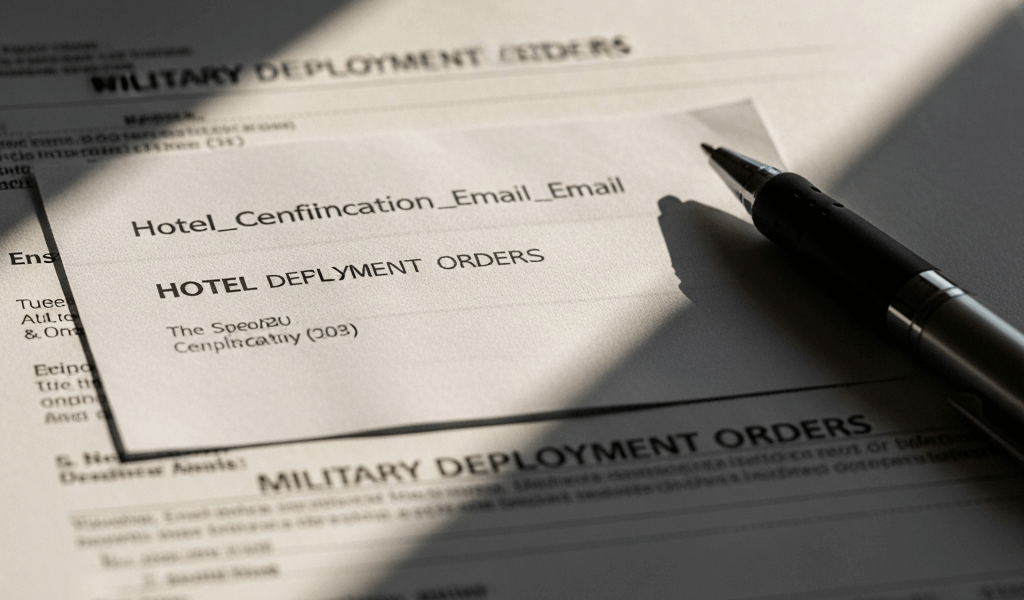
TDY Hotel Cancellation Fees — Who Pays When Orders Change
TDY orders getting changed mid-trip has gotten complicated with all the confusion flying around about who actually pays when a hotel cancellation fee shows up. I’ve watched service members get blindsided by these charges, unsure whether the government would cover them or if they’d be out the money themselves. The answer to tdy hotel cancellation fees who pays when orders change really comes down to one thing: who made the decision to cancel, and did it go through official channels?
After spending years sorting through TDY reimbursement disputes, I learned something that surprised me — the Joint Travel Regulations, or JTR, actually has your back in most of these situations. You just have to know where to look and document everything properly in DTS. Today, I’ll share what I’ve learned.
When the Government Owes the Cancellation Fee
Here’s the military’s basic principle, and it’s simple: service members shouldn’t pay because the government changed its mind. If your TDY orders got modified, cancelled, or your return date moved up — and you had nothing to do with it — that cancellation fee becomes a government liability. Full stop.
Real-world situations where this applies:
Early Return Orders. Your unit calls you back three days before your scheduled return date. You cancel those remaining hotel nights. Who pays the cancellation fee? The government does. No debate. JTR Section 020107-B is clear: cancellation costs tied to order modifications are reimbursable. You made a booking based on orders you received. When those orders changed, the cost that followed was the government’s responsibility, not yours.
Extension Denial. You request a two-week extension. Finance approves it. You confirm 14 additional nights at the hotel — you’re committed at that point. Then higher command denies the extension without warning, and you have to leave immediately. That cancellation fee? The government’s responsibility. You made a reasonable purchasing decision based on orders that were approved and confirmed.
TDY Location Change. Your tasking order said Dallas, so you booked the Omni there. Three weeks in, command redirects you to Houston. You cancel Dallas, book Houston. The Dallas cancellation fee is reimbursable — you didn’t choose to change locations. Your command did. The fee that resulted is their problem, not yours.
Dependency Reassignment or PCS Timing. Your TDY extended into your in-clearance week before PCS. Orders get modified, TDY ends early, and you lose the hotel nights you’d already pre-paid. Reimbursable. Same logic applies.
The thread connecting all of these — the government changed something about your mission. You didn’t initiate the change.
Probably should have opened with this, honestly: keep your original order document and any amendments to it. Take screenshots of everything. Save emails from your S-1 or Flight Chief confirming the change. Hotel correspondence showing the reason for the cancellation — not just that you cancelled, but why — becomes crucial when you’re fighting for reimbursement later.
When You’re Personally Liable for the Cost
The picture gets much clearer when the decision to cancel came from you.
Personal Emergency or Compassionate Reassignment. Your spouse has a medical emergency back home. You request early return and it gets approved. You cancel the hotel. That cancellation fee is yours. The government approved your request, but they didn’t create the emergency — you did. There’s a difference between the government changing plans and you asking the government for permission to change yours.
You Changed Your Mind. You booked five nights, then decided three would do. You cancel the remaining two. Your cost. No gray area here.
Non-Refundable Rate Selection. This one catches people all the time. You selected a non-refundable rate to save $40 per night — the room was $120 at the Holiday Inn Express, and you booked the stripped-down rate. The terms were explicit: no cancellation flexibility. Then something happens and you try to cancel anyway. The hotel applies the full rate as a penalty. The government won’t reimburse a penalty you created by deliberately selecting a discounted rate that waived your cancellation rights.
I made this mistake once — booked a $95/night non-refundable rate in Fort Worth instead of paying $130 for a flexible rate. TDY ended early due to a mission abort, and I forfeited $285. Apparently I thought the $35 savings was worth the risk when TDY dates are uncertain. It wasn’t. Don’t make my mistake.
Booking Outside Approved Channels. You booked a hotel that wasn’t on the GSA list or your approved vendor portal without getting authorization first. You cancel it. Finance will argue the government never approved that vendor or that rate, so you assumed the risk by booking it. They have legal ground to stand on here, unfortunately.
Delay Caused by You. You decided to stay an extra weekend for personal reasons, then got called back early. That cancellation fee is on you.
How to Document Cancellations in DTS
DTS doesn’t give you an obvious field for “cancellation fees the government caused.” You have to be deliberate about how you enter this.
Create a Separate Line Item. Don’t try to bury the cancellation fee in your original hotel expense. In DTS, when you post your lodging segment, reduce the number of nights to match what you actually stayed. Then create a new line item — use “miscellaneous” or “other lodging” — specifically for the cancellation fee amount. Make it visible, not hidden.
Gather the Exact Receipt. The hotel needs to provide a cancellation confirmation that includes:
- Cancellation confirmation number
- Original reservation number
- Nightly rate and number of nights cancelled
- Total cancellation fee charged
- Date of cancellation
- Hotel’s cancellation policy as it appeared in your booking
If the hotel won’t provide this in writing, call their finance department and request it via email. Marriott, Choice Hotels, and Hilton all have dedicated phone lines for this kind of request. They’ll send it to you within 24 hours if you ask properly.
Attach the Order Document. Your amended orders or the email from your command confirming the TDY change must be attached to that DTS line item. Screenshot the effective date and the specific language showing how it contradicts your original booking dates.
Write a Narrative in DTS Comments. Don’t assume the Finance reviewer will connect the dots themselves. Write something like this:
“Original TDY orders authorized lodging through 22 JUN. Amendment received 20 JUN requiring return to home station 21 JUN, reducing authorized stay by one night. Hotel Courtyard Austin charged $145 cancellation fee per their non-flexible rate policy. Cancellation was government-directed per order amendment attached.”
That’s specific. That’s defensible. That’s what wins.
What to Do If Your Finance Office Denies the Reimbursement
Some Finance offices reject cancellation fees on the first submission. This happens more often than you’d think, and it doesn’t necessarily mean you’re wrong.
Understand the Denial Reason. Request the specific cite from your Finance office. Are they saying it’s personal? That you booked outside approved channels? That the non-refundable rate excludes cancellations? Get the reason in writing.
Gather Escalation Evidence. If the denial was based on a misunderstanding — which is often the case:
- Contact your hotel directly and request a signed statement explaining why the cancellation fee was charged. Get them to confirm it was their policy, not a service fee they added.
- Obtain a copy of the GSA rate for that city and date to show whether you booked within approved limits.
- Get written confirmation from your command — your S-1, Flight Chief, whoever authorized the TDY — stating that the order change was government-initiated.
- Pull the JTR section supporting your claim. That’s JTR 020107-B or the specific regulation for your branch. Have it ready.
Resubmit with Narrative Rebuttal. Send the claim back to Finance with a cover memo:
“Previous submission denied based on [reason]. The attached documentation demonstrates: (1) the hotel cancellation was government-ordered per amended TDY orders dated [X], (2) the cancellation fee is a standard hotel policy fee, not a service charge, and (3) JTR 020107-B Section C authorizes reimbursement of cancellation costs resulting from order modification. Request reconsideration and approval.”
Escalate to Your S-1 or Finance Officer. If Finance denies again, send a memo up your chain asking your S-1 to advocate for you. Sometimes it’s just a junior Finance technician who doesn’t fully understand military TDY policy, and a conversation between S-1 shops fixes it in an afternoon.
File a Formal Dispute. If you’ve resubmitted twice and been denied both times, most services allow you to file a formal DTS dispute. Document everything and request an appeals review. This escalates it past whoever initially reviewed it.
Prevention Checklist Before Booking
The best cancellation fee is the one you never have to deal with.
Confirm Final Orders First. Before booking any hotel, make sure your TDY order is final and approved by your commander or whoever has signature authority. Don’t book based on a tentative tasking email — that’s a mistake. Wait for the formal order to land.
Flag Uncertain Dates with Your Chain. If you know the TDY dates might slip, tell your S-1 or Flight Chief explicitly: “I’m booking a flexible-rate hotel because our tasking end date hasn’t been confirmed by higher command.” This creates a paper trail showing you made a reasonable choice given what you knew at the time.
Use Free Cancellation Tiers. Whenever you can, book hotels with free cancellation up to 48 or 72 hours before arrival. These typically cost $5–$15 more per night than non-refundable rates. That premium is insurance. On a $110 room, a $10 upgrade to free cancellation is worth it if there’s any TDY date uncertainty at all.
Check GSA Rates. Book through the GSA rate portal when it’s available. These rates almost always include free cancellation and are pre-approved, eliminating vendor disputes later on.
Photograph the Cancellation Policy. Before clicking “Book,” take a screenshot of the hotel’s cancellation policy as it appears at that moment. Save it. This proves what terms you agreed to if there’s a dispute six months down the line.
One last thing: talk to your TDY peers before you travel. Ask them which hotels charged surprise fees and which ones were easy to work with. Real experience beats online reviews every single time.



Leave a Reply