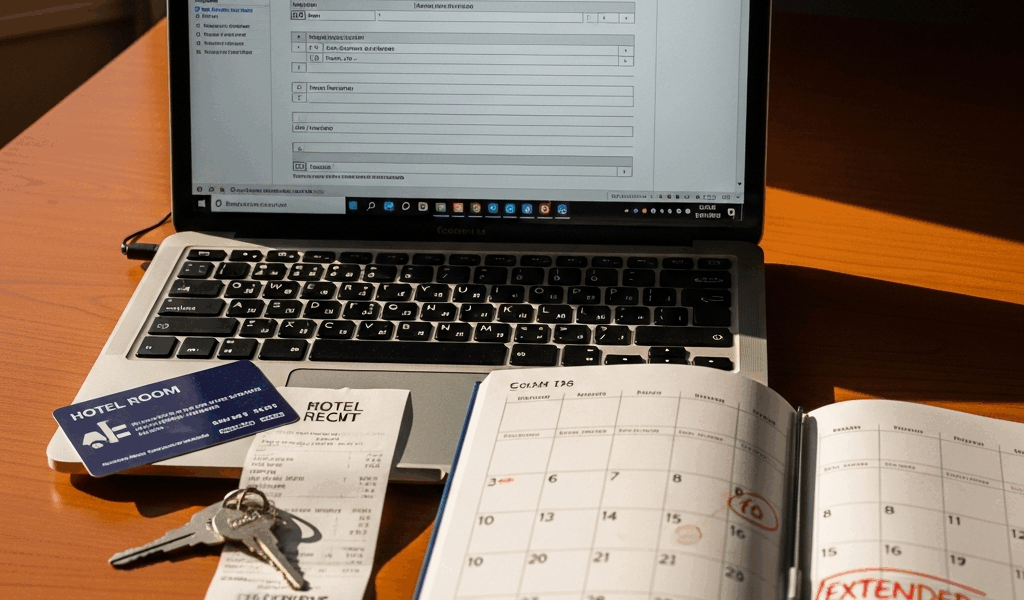
Your Orders Changed — Here Is What to Do First
TDY extensions have gotten complicated with all the confusion and last-minute chaos flying around. I’ve stood in that exact moment — phone in hand, staring at an email from my AO saying the mission just got pushed another two weeks. Your pulse jumps. Your hotel checkout is in three days. And the orderly timeline you spent hours building is suddenly gone.
Speed matters here. Not in a panic-and-break-things way, but in a hotels-fill-up-fast, DTS-takes-forever, per-diem-gets-messy kind of way. Wait for perfect paperwork and you might find yourself paying out of pocket for a room the government should have covered. I watched a colleague do exactly that in Dayton — sat on his hands for 48 hours waiting for his amendment to clear, lost his room at the Marriott on Colonel Glenn, and ended up at a place charging $189 a night over per diem.
So, without further ado, here’s your immediate action list. Call your AO right now — not an email, a call. Tell them the extension happened and ask whether amended orders are already moving. Then, while you still have momentum, contact your current hotel. Ask if they can extend your reservation at the same government rate. Many will hold the room if you call within a few hours of learning about the extension. Wait until tomorrow and you’re gambling with inventory that doesn’t wait around.
Third priority: don’t book a backup hotel until you know whether your current one can extend. That’s what I did wrong early on. Panicked, booked a second property out of pocket, told myself I’d get reimbursed. I did — technically. But the voucher went into reconsideration twice because the amounts didn’t line up with per diem, and I had to write a formal justification for why I’d left the original location. Completely avoidable. Don’t make my mistake.
The rule that actually matters: amended orders and lodging confirmation should happen in parallel. You do not need a fully approved amendment before calling the hotel. You need to act before the rooms disappear.
How to Get Your DTS Authorization Amended
The amendment process depends on who built the original authorization. If your AO created it, they almost always initiate the amendment too. If you self-authorized, you typically amend it yourself — but your AO still has to approve before you start stacking new expenses.
Log into DTS and pull up the original authorization. You’ll see fields for departure date, return date, and authorization end date. Extensions move one or more of those. Your AO will either push the end date out or spin up a brand-new authorization for the extended period — policy varies by command, so ask which route they’re taking. That answer affects how you document everything later.
Amendments usually take 24 to 48 hours to process. Sometimes longer if the approving officer is traveling or if the change triggers a budget review. That’s fine — your hotel extension is already confirmed (or you’re working Plan B), and you’re already compliant. The amendment catches up to reality. That’s how it’s supposed to work.
If you have to book lodging tonight and the amendment isn’t approved yet, document the gap. Write down the date and time you contacted the hotel, the name of whoever you spoke with, what they confirmed. Screenshot the email you sent your AO requesting the amendment. When your voucher hits DTS later, attach a short timeline note. Finance will occasionally question lodging charges that appear before an amendment clears — that note is your answer.
One more thing: do not charge new nights to a personal card unless you have genuinely zero other option. Out-of-pocket expenses take longer to reimburse, require more paperwork, and have a higher chance of getting kicked back. If you do end up paying out of pocket, keep every receipt — the original confirmation, the extension confirmation, and the folio at checkout.
Lodging When Your Hotel Cannot Extend Your Stay
Sometimes the hotel just can’t extend you. Booked solid, or they’ll extend the room but won’t hold the government rate for the extra nights. Both happen more than people expect — especially at busy TDY locations or during training surge periods.
First ask if switching room types helps. A standard queen or a smaller unit is usually cheaper, and hotels tend to have more flexibility with those. If that goes nowhere, ask about sister properties. Many chains — Hilton, Marriott, IHG — will shuffle government travelers between nearby locations and honor the same rate. I’ve seen this work at Hampton Inns probably four or five times.
If neither option pans out, you need a new property that falls within your authorized per diem rate. Pull up the JTR per diem tables for your location — they list the maximum daily lodging rate by city and county. Cross-reference with GSA’s rate listings or your command’s authorized vendor list. Better yet, call your CTO or TMC first. They often have override codes and negotiated rates that aren’t visible when you search on your own.
If nothing available falls within per diem — and you’ve documented that genuinely nothing works — the actual expense process exists for exactly this situation. The government will reimburse reasonable lodging costs above per diem, but you have to justify it with paper. Screenshots showing no availability at authorized rates. Records of calls made and emails sent. Without that trail, finance will deny the claim and hand the difference back to you.
Per Diem and Meals During an Extended TDY
Per diem continues at the same rate unless the extension moves you to a new location or pushes you past a duration threshold that triggers a rate change. That second part is where most people get tripped up. An extension doesn’t create a new travel day or reset your per diem calculation — it just moves the end date on your current authorization.
But check the JTR tables for your duty location anyway. Rates sometimes drop after day 30, occasionally sooner. If your extension crosses one of those thresholds, your AO will adjust the rate downward in the amendment. It’s automatic — not a penalty, just how the structure works. Better to know before you build a budget around a number that’s about to change.
Meal deductions are a separate question entirely. If you’re at a training site with a dining facility, they may keep deducting meals from your M&IE even after the extension. If you’re at a hotel with no food service, you keep the full rate. Ask your AO or the billeting office which situation applies to you. That one detail — honestly — determines your actual take-home reimbursement for the extended period.
What to Save and Submit When You Finally Return
Probably should have opened with this section, honestly. The documentation you pull together right now determines whether your voucher sails through finance or gets kicked back three times over the next two months.
Save everything: original orders, amended orders once approved, every lodging receipt including your first hotel confirmation and the extension confirmation, any out-of-pocket receipts from the scramble, and your DTS authorization and amendment records. Used a second hotel? Keep both properties’ confirmations. Keep the folio from each checkout.
Write a brief narrative — one page, maybe less. When the extension happened. How you found out. What calls you made and when. How the lodging situation resolved. Include specific dates. This document takes about ten minutes and prevents a finance officer from spending two hours reconstructing your trip from scattered receipts and guesswork.
Anything that falls outside standard per diem — a hotel that ran over rate, a meal expense that wouldn’t normally be covered, a transportation change the extension forced — flag it upfront with receipts and a one-sentence justification. Anticipating their questions cuts weeks off your reimbursement timeline.
Missing documentation on extended TDYs is one of the top reasons vouchers get bounced back to travelers. Most of the time it’s not because anyone did something wrong. It’s because the paper trail is scattered across email threads, desk receipts, and memory, and the finance office can’t reconstruct a coherent picture. Build the trail while you’re still on location. An hour now, easily, saves weeks of back-and-forth later.




Leave a Reply