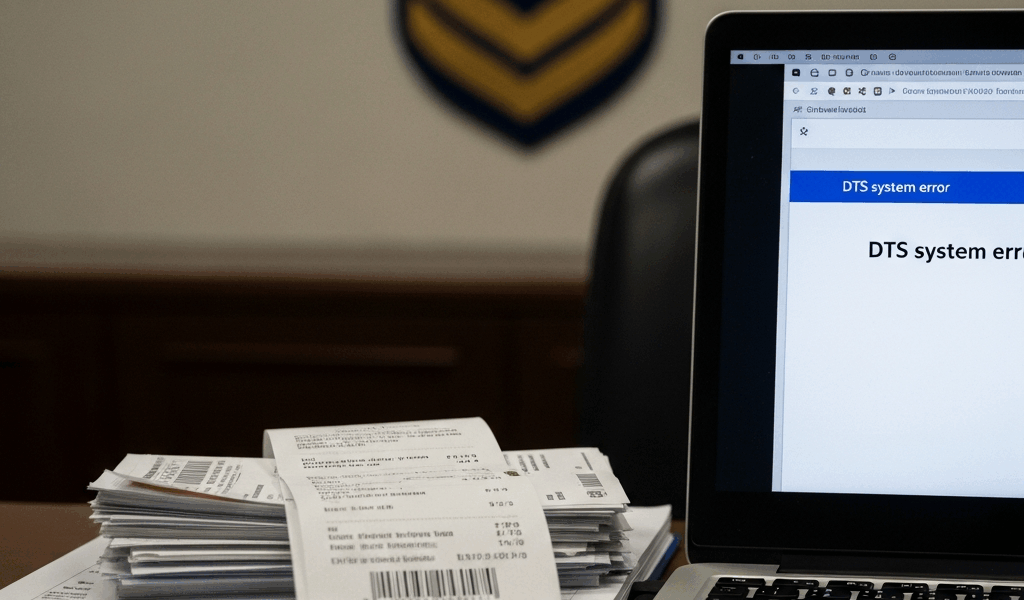
Why Your Per Diem Was Denied in DTS
Per diem denials in DTS have gotten complicated with all the different rules flying around. I’ve watched service members submit TDY vouchers, wait two weeks, then watch the system flag their per diem as ineligible. The rejection just sits there in your account like bad news you can’t unsee. Before you panic or assume the whole system’s broken—it might be—you need to identify which of these six common denial reasons is actually blocking your reimbursement.
Missing receipt documentation is probably the most frequent culprit. The government wants itemized hotel folios. Not credit card statements. They want meal receipts with dates, merchant names, and amounts. Missing even one receipt can torch an entire claim.
Meal claims without lodging catches a lot of people. DTS won’t reimburse meals at the daily rate unless you’re also claiming lodging for that same day. It’s weird logic, honestly—but that’s how it works. You can’t claim $51 in meals while staying home.
Per diem claimed for travel day only is another trap. The rules differ depending on whether your unit considers the travel day itself a TDY day. Some commands do. Most don’t. If your voucher shows departure day with a full per diem claim and no overnight lodging, Finance sees that as improper.
Dependent meal claims almost never get approved. Military members sometimes try to include spouse or child meals on the government’s dime during TDY. That’s not authorized. Only your own meals count—and only at approved rates for that location.
City per diem rate mismatch happens when you claim the wrong daily rate for your duty station. DTS should auto-populate rates from the Joint Travel Regulations (JTR), but data entry errors occur. Claiming $80 per diem when the authorized rate is $63 will get flagged immediately.
Overlapping duty station dates create denials when your TDY end date overlaps with a new permanent change of station (PCS) start date, or when you submit multiple vouchers covering the same days.
Probably should have opened with this section, honestly. I got the diagnosis step wrong my first time dealing with DTS denials—wasted three days trying to appeal a lodging issue when the real problem was a missing meal receipt from day three. Don’t make my mistake.
Check Your Denial Reason in DTS Right Away
Log into DTS now. Go to your Dashboard. Find the voucher showing “Incomplete” or “Rejected” status. Click it.
The system displays rejection reason codes in a red-highlighted section near the top. These codes matter. Write them down. They might look like “PER-001” or “LOD-405″—each code corresponds to a specific rule violation. You need this code for your rebuttal.
Scroll down to “Exceptions” or “Line Items.” DTS highlights rejected line items in red. These are the specific days or expense categories that failed approval. A meal claim might be approved while your lodging claim sits rejected. You need to see which items passed and which didn’t.
Check the “Reviewer Comments” field. Your finance office might have left actual guidance here—sometimes you’ll see comments like “Missing hotel folio for 15-20 NOV” or “Daily rate exceeded authorized amount by $17.” That comment is gold. It tells you exactly what to fix.
Screenshot this entire page. Right now. Do it before you do anything else. You’ll reference this later, and sometimes denial notifications expire from view after 45 days. Having a screenshot prevents you from losing the specific reason code.
Note the submission date and deadline for rebuttal. Most installations give you 30 days from the denial date to respond. That sounds like forever until you’re sitting at day 28 with incomplete documentation.
Gather Evidence Before You Appeal
Here’s what actually gets the government to reconsider:
Hotel folio—not a credit card bill. The folio shows the property name, address, check-in/check-out dates, nightly rate, number of nights, and total amount paid. It should match your DTS entry exactly. If you stayed at the Hilton in Charleston from November 15-18, your folio needs to confirm those exact dates. Most hotels email this automatically when you check out. If you didn’t get one, call the hotel’s accounting department with your confirmation number. They’ll send it in 24 hours.
Meal receipts with dates and amounts. A Starbucks receipt showing “$6.47” means nothing without a date. You need the merchant, the date, and ideally a category—breakfast, lunch, dinner, or incidental. Some finance offices are strict about this. Others just need you to stay under the daily allowance. Photograph every receipt the day you get it. Use an app like Expensify that timestamps images automatically.
Travel voucher showing your approved TDY dates and authorized per diem rates. Your orders or email authorization from your travel coordinator becomes backup evidence. This proves when the government authorized your TDY to start and end. If your orders say “TDY 15 NOV – 20 NOV” but your voucher claims per diem through November 21, Finance will deny the 21st every time.
Duty station assignment letter or PCS orders. If your denial mentions “overlapping duty station dates” or questions whether you were actually stationed somewhere, this document clarifies everything. It shows your assignment start date. If you’re confused about whether November 1 or November 2 was your official TDY start, this letter answers it.
Lodging tax exemption letter if applicable. Government employees don’t pay room taxes in many states. If you had a tax-exempt stay and Finance is denying your lodging claim, the exemption letter proves the taxes weren’t added to your bill. That missing tax might explain a $40 discrepancy.
Common missing piece—the property address. Your hotel folio shows “Hilton Downtown.” Your DTS entry says “Hilton.” Finance denies it, questioning whether it’s the same property. Include the full address: “Hilton Charleston Downtown, 60 Folly Street, Charleston, SC 29403.” This prevents confusion.
File Your Rebuttal in DTS or Escalate to Your Finance Office
You have two paths. Neither is wrong. One is faster.
DTS rebuttal feature: Log in. Find your rejected voucher. Click “Prepare Rebuttal.” The system opens a text box where you explain why the denial was wrong. Attach your documentation as PDFs. Hit submit. Your finance office reviews it within 5-10 business days, usually. Turnaround time is predictable but slower.
The rebuttal note should be direct. Write: “The denial cited missing lodging documentation. I’ve attached the hotel folio from the Hilton Charleston dated 15-18 NOV 2023, confirming $89/night rate and 3-night stay, totaling $267. This matches my claimed amount of $267. Please reconsider.” No flowery language. No excuses. Just “here’s what you said was wrong, and here’s the proof.”
Call your finance office directly—this is often faster. Ask for the travel pay section. Explain that your voucher was denied and you want to discuss it before formally appealing. Have your reason code, voucher number, and denial date ready. Say: “My TDY voucher 56789 was denied on [date] for missing meal receipts. I’ve gathered those receipts now and want to know if I can resubmit or if I need to file a formal rebuttal.”
The person on the phone might tell you to email documentation directly rather than use DTS. Follow that instruction. They might say, “Resend through DTS, and we’ll prioritize it.” Do that. Sometimes they’ll just approve it right there during the call if you have all documents ready. I’ve seen that happen when a member called with a minor discrepancy and had proof immediately available.
Expected timeline for rebuttal: 15-30 days if you use DTS. 5-10 days if finance pulls your file after your call and processes it manually. Choose the faster path if you need the money urgently.
If Finance Denies You Again, What You Can Claim
Rejection number two doesn’t mean you’re out of money. It means you escalate.
Commander review: Your commanding officer can request the finance office reconsider. This carries weight. Request a commander’s inquiry in writing. Your commander can ask why Finance interpreted the regulation a certain way and whether an exception is warranted. Success rate is moderate—maybe 40% of cases get approval after commander involvement, usually because the commander’s rank carries credibility.
Ombudsman complaint (overseas TDY only): If your TDY was outside the US, an ombudsman can intervene. This is particularly useful if you believe the denial was procedurally unfair or misapplied rules. Ombudsman cases take 45-60 days but result in documented findings. Finance often complies when an ombudsman report questions their decision.
Informal pay inquiry: Submit a formal request for reconsideration to your base finance office in writing. Include all evidence and cite the specific regulation you believe supports your claim. This creates a paper trail. If denied again, you have documentation proving you tried.
SF-1127 claim form: This is the nuclear option. It’s a formal claim against the government for unpaid travel expenses. Your installation’s finance office should explain the process. Realistically, you’ll only get here if the dollar amount is substantial—over $500—and you’ve exhausted other options. Processing takes 60-180 days, but you’ll get an answer.
Realistic timelines: Commander review, 10-15 days. Ombudsman case, 45-60 days. SF-1127, 60-180 days. Most members never need these options. Most denials get resolved in the rebuttal phase.
Start with the DTS rebuttal and finance office call. You’ll solve the problem there 70% of the time.



Leave a Reply